
A Climate-Changed Holiday: Interrailing in a Heatwave
This August, we ventured a little further afield than our usual staycation. Wanting to keep our carbon footprint as low as possible, this meant trains. LOTS of trains.
Over the course of two weeks, we travelled by rail from Wales to France, Italy, Austria, Slovenia, and Switzerland, finishing at my parents’ in the Isles of Scilly, England. We took four night trains, visited eight UNESCO World Heritage Sites, travelled 3,330 miles, stood 3,572 metres above sea level at the Jungfraujoch, and descended 163 metres underground into Slovenia's astonishing cave systems. Temperatures ranged from 5°C to 39°C.
Our children, aged 10 and 7, loved it. Apart from a few inevitable food- and walking-related meltdowns, and one memorable incident involving Child 1 getting her head stuck in a train station barrier, it was the best family holiday we've ever had.
The joy of travelling slowly
There is something magical about falling asleep in one country and waking up in another. Night trains saved accommodation costs and transformed long journeys into part of the adventure. Unlike flying, train travel (mostly) involved simply turning up and getting on: minimal stressful hours spent in departure lounges or queues. Stations felt connected to the places we were visiting, and travelling became part of the holiday rather than an obstacle between destinations.


As the journey progressed, the children became noticeably more content with travelling. Long stretches became normal and went by quickly. Waiting for trains was often the highlight of the day: a young woman cradling kittens at Paddington; a marmot in Turin’s Parco del Valentino; a man walking an emu through Ljubljana...
Climate change as a travelling companion
But we were interrailing in a heatwave. For the children, this holiday was when climate change stopped being something I talked about, and became a constant companion.

Climate change was everywhere. In Paris, we watched news reports of wildfires after a day walking through parched parks beneath false autumn trees. Stepping off the train in Turin was like walking into a steam room. Rome was even more intense. All of us became grumpier and more tired as temperatures climbed, and heat shaped almost every decision we made.

We sought out public swimming pools, and sightseeing had to be carefully planned around siestas. We designed our routes around shade, fountains and anywhere that might provide relief. Portable fans were indispensable, and even with an early morning entry slot at the Vatican, we soaked our clothes in the sinks to stay cool.

Some things simply became impossible. One evening in Rome we looked across at the Roman Forum. It was already 7pm, but the temperature remained so oppressive that none of us could face crossing to it. Murano, on our Venice itinerary, suffered a similar fate when the children simply became too hot to continue. In Rome's main station, waiting for our night train felt unbearable, the only respite being air-conditioned shops.


Yet our discomfort was temporary. In Rome, we struggled to take a rest on hot marble steps, and while we could get up and move on, others had to remain, sleeping rough on the scorching ground while we retreated into an air-conditioned hotel room. We could seek out the nearest pool or misting station, while many older and vulnerable people could not. The heat was an inconvenience for us, but for others it was a genuine health risk.


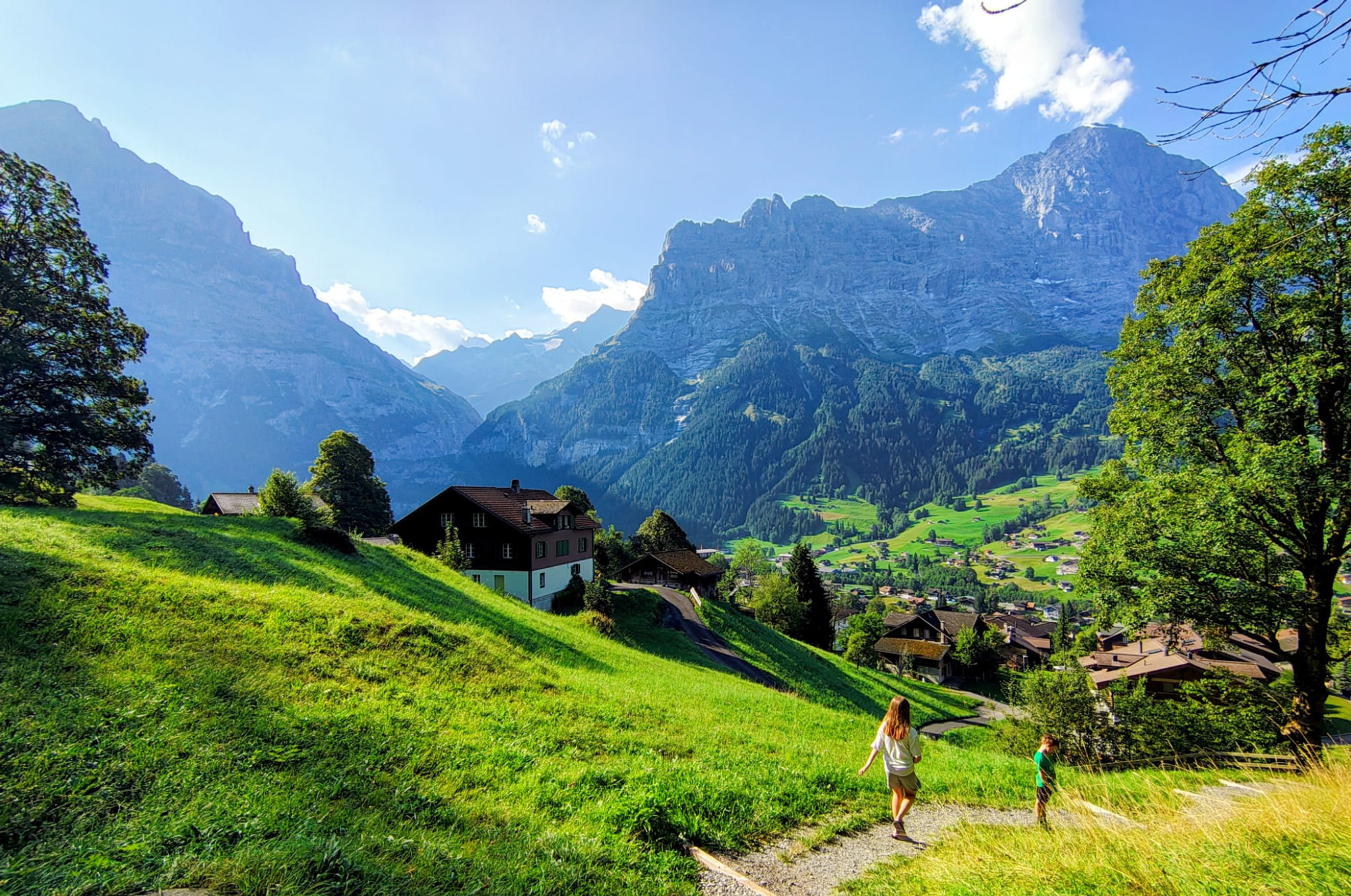
After days of heat, we were able to retreat to Slovenia's underground world for a respite. The 10-12oC Škocjan and Postojna caves were highlights of the entire trip. Vast underground chambers, rivers carving through limestone, strange rock formations and the extraordinary olm (a cave-dwelling amphibian nicknamed the ‘human fish’). The breezy Bernese Oberland, Switzerland, was also a hit.
But here too, climate change was around every crag. We walked in the heat at Glacier Canyon, where the Lower Grindelwald Glacier stood just a few decades ago. While the children made snow angels at Jungfraujoch, we wondered if there would be any snow there at all if they return in future.


After this experience, if they do return to Switzerland, it will probably be on a train. And we’re not the only ones bitten by the interrailing bug - night trains in particular are having a bit of a resurgence in Europe and it is a great time to travel with kids while interrail passes are free under twelve years old. So, for anyone considering an interrailing adventure with children, especially in the face of climate change, here are a few lessons we learned along the way:
Take child-friendly activities seriously. Sightseeing alone won't cut it, especially when it is hot. We found the fantastic Lonely Planet's Not-for-Parents guides indispensable and hunted out all the shady playparks near the sights the adults wanted to see.
Fans, wet hats, and handkerchiefs, were game-changers. Siestas were also essential in Rome and Venice, where we visited sights only early in the morning or late evening.
Swim, head underground or up a mountain whenever possible! For us, Austria and Slovenia won for lakes, while Grindelwald and Rome won for public swimming pools. Austria and Slovenia’s karst is heaven for caves, and the Bernese Oberland offers several ways to get up and down mountains (Trottibikes were our favourite).
Consider pull-along suitcases rather than backpacks for children. Even with minimal luggage, the backpacks rapidly became too heavy and sweaty for Child 2. Meanwhile both children competed endlessly over who got to pull my suitcase.


We started this trip hoping for a lower-carbon family holiday with some culture (and caves!) along the way. What we found was slower, more relaxed travel, newfound friends, and adventure. But at the same time, climate change was impossible to ignore. It shaped where we went, what we did, and even what we ate (nothing too perishable, and certainly no sweaty cheese). Yet despite the heat, despite the careful planning, despite the occasional meltdown and barrier-related mishap, this was our favourite family holiday ever. The children are already asking when we can do it again. We hope to do so one day, but we might head north to cooler climes next time, or avoid the summer all together.


Comments